
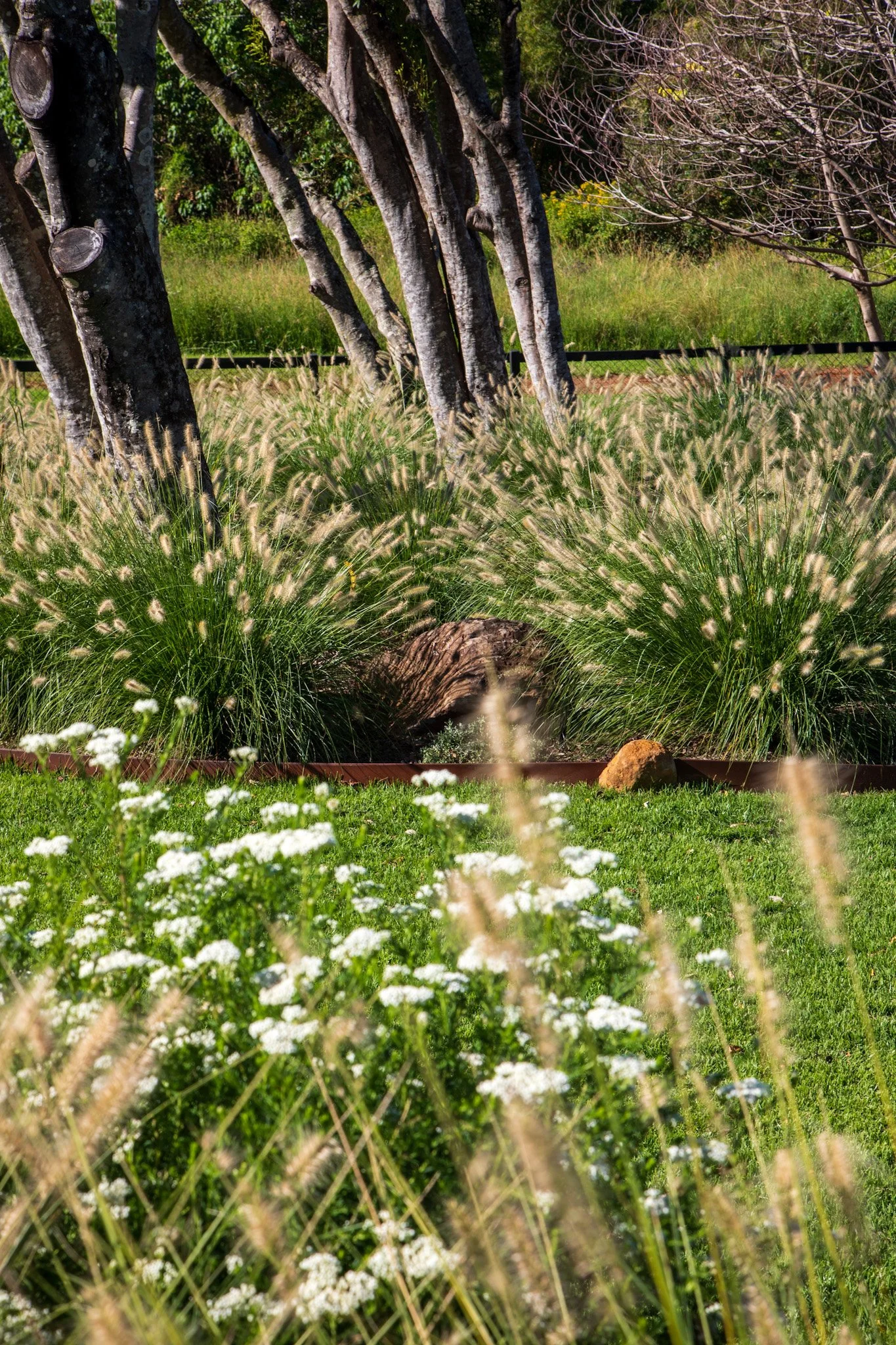
Creating a garden in Newcastle, NSW can be a bit of a balancing act, where choosing the right plants to suit the specific site conditions is paramount. If you’re tucked away in the leafy streets of New Lambton, you’re dealing with different wind and soil conditions than someone gardening on the salt-sprayed cliffs of The Hill or the sandy stretches of Stockton.
Designing a garden here isn't just about what looks good in a pot at the nursery; it’s about understanding the personality of your specific site. Below you will find a list of eight different plants, divided into categories: Trees, Shrubs, Groundcovers and Grasses, with two in each category. They are proven performers, and, when combined together create a stunning coastal garden that will thrive in any coastal or lakeside location around the Hunter.
The Canopy: Finding Shade
A tree in Newcastle has a big job: it needs to provide relief from the summer sun without being shredded by a southerly buster.
Blueberry Ash (Elaeocarpus reticulatus 'Prima Donna')
'Prima Donna' is a sophisticated choice for suburban blocks where space is at a premium. It offers a soft, narrow silhouette that doesn't overwhelm a small backyard. In late spring, it produces fringed, pale pink flowers—looking almost like tiny lanterns—followed by deep blue berries that the local figbirds and bowerbirds adore. It’s also a great small tree for an informal hedge!
Coastal Banksia (Banksia integrifolia)
If you live within earshot of the surf, this is your tree. There’s an effortless, rugged beauty to its twisted trunk and silver-backed leaves. It doesn't just tolerate the salt; it thrives in it. Its pale yellow flower spires provide a vital nectar source for honeyeaters during the cooler months when other food is scarce. It’s dark green leaf with silver underside means it also pairs well with other silver and tonal native shrubs.
Mid-Storey: Texture and Resilience
Shrubs define the feel of a garden. These two natives offer a soft, tactile quality while being incredibly tough and easy to maintain.
White Correa (Correa alba)
There is a quiet elegance to the White Correa. With its leathery, rounded grey-green leaves and starry white flowers, it’s the perfect plant for those exposed frontline positions. It handles the salt spray of Merewether with ease and can be left to grow naturally or clipped into soft, rounded spheres making it a very versatile plant. It pairs well with native grasses such as Lomandra 'Crackerjack' and Poa labillardieri 'Eskdale'.
Heath Banksia (Banksia ericifolia 'Little Eric')
'Little Eric' is a compact, dwarf version of the larger Heath Banksia. It’s a fantastic choice for adding structure to a garden bed without blocking a view. The long, burnt-orange flower spikes are architectural marvels, and watching the local birds forage through them is one of the great joys of a Newcastle winter. Be sure to feed correa and banksia with a native fertiliser only for best results.
Groundcovers: The Living Carpet
In our fast-draining sandy soils, groundcovers are essential for keeping moisture in the ground and suppressing weeds.
Aussie Rambler (Carpobrotus glaucescens)
This is our native Pigface, and it’s a master of the exposed coastal garden. It has thick, succulent leaves that store water, making it virtually drought-proof once established, with the leaves and fruit also edible. The massive, neon-pink flowers are a showstopper, particularly when draped over a retaining wall or used to stabilise a sandy slope.
Desert Flame (Chrysocephalum apiculatum)
Perfect for a warm pop of colour, 'Desert Flame' provides a beautiful contrast. Its silver-grey foliage and tiny, golden button flowers bring a bright, sunny energy to the garden floor. It’s common name is the 'Everlasting Daisy' which, as the name implies means the flowers stay looking fresh for months on end.
The Grasses: Movement and Sound
One of the best parts of a coastal garden is the sound of the wind. Grasses translate that breeze into movement.
Knobby Club-rush (Ficinia nodosa)
You’ll see this growing naturally around Glenrock Lagoon and our local dunes. It’s a tufted, upright rush with quirky, spherical seed heads at the tips. It’s incredibly versatile - tolerating "wet feet" in a low spot of the yard just as well as it handles a dry, sandy bank. The deep, narrow foliage with small, rounded seed heads provide a beautiful deep green contrast against other silver or lighter green shades within the garden.
Tussock Grass (Poa labillardieri 'Eskdale')
'Eskdale' is a refined version of our native Tussock Grass. It forms a dense, fountain-like clump of fine, blue-green blades. It’s particularly effective when planted in groups, where it can sway in the breeze, softening the hard lines of fences or stone paths. It's also very effective at stabilising the soil, perfect for erosion control.
Understanding Your Site
Before you start digging, take a moment to observe your garden's microclimate. Is the afternoon sun baking a particular corner? Does the wind whip around the side of the house?
Successful gardening in Newcastle is about working with the elements, not against them. By choosing plants like these that have evolved for our specific coastline, you’re setting your garden up for years of effortless growth with a garden that feels natural, and provides sanctuary to the local fauna.
Thinking about a landscape plan or re-designing an existing garden? Contact us to learn how we can help. If you’re thinking about including a pool in your landscape, read our article for some tips on choosing the right pool for your project.